Your oven door does more than just keep heat in. It’s an active part of how your oven maintains temperature, operates safely, and cooks food evenly. When the door hinges or gasket start to fail, you’ll notice it fast, but most homeowners don’t immediately connect a cooking problem to the door.
Here’s what typically goes wrong with oven doors, and what you should do about it.
Why Oven Door Components Matter
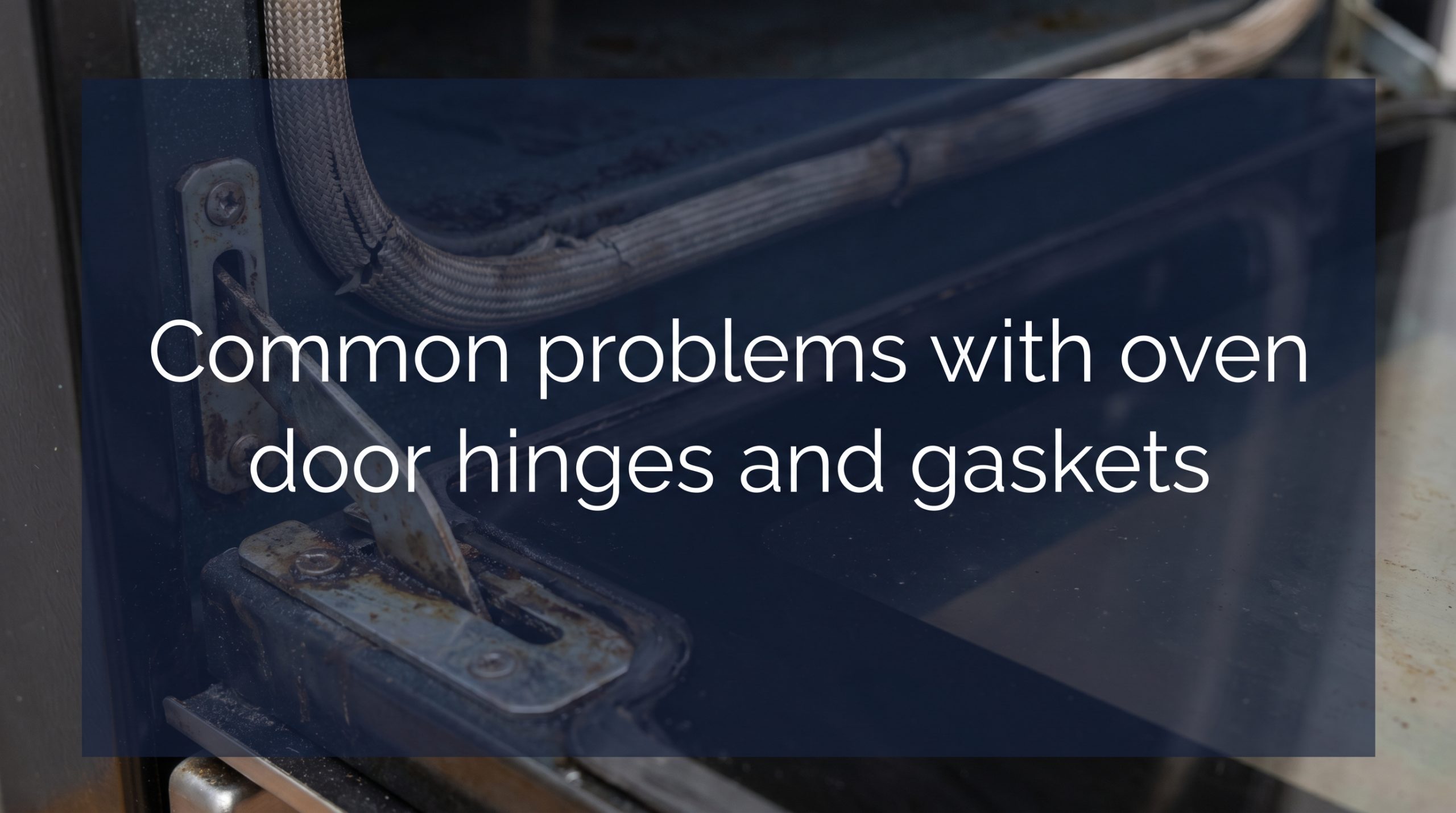
The door gasket (also called the door seal) is a flexible rubber or fiberglass strip that runs around the perimeter of the oven door. It creates an airtight seal when the door is closed, keeping heat inside the oven cavity where it belongs.
The hinges are what allow the door to open and close smoothly. They also keep the door sitting flush against the oven frame. When hinges are worn or damaged, the door can’t seal properly, even if the gasket itself is in good shape.
These two components work together. If either one fails, your oven will underperform.
Common Gasket Problems
Worn or Cracked Gasket
Over time, the gasket hardens, cracks, and loses its flexibility. When it stops conforming to the door frame, gaps form around the seal. You may notice heat escaping from the door edges, or the area around your oven getting unusually hot when it’s in use.
A degraded gasket forces your oven to work harder to hold temperature, which drives up energy use and leads to longer preheat times.
Gasket Pulled Away From the Door Frame
The gasket is usually held in place by a channel or retainer clips. With regular use, it can pull away from the frame, especially around the corners. When this happens, you’ll see a visible gap between the door and the oven cavity.
Don’t ignore this. A pulled gasket means significant heat loss and potentially uneven cooking.
Gasket Burned or Melted
If something drips on the gasket during cooking, or if the oven runs very hot for extended periods, the gasket material can burn or melt. Burned sections no longer seal properly, and in some cases, a damaged gasket can produce an odor during cooking.
This type of damage is easy to spot visually. Look for dark, stiff, or compressed spots along the seal.
Stiff or Sticky Gasket
A gasket that feels hardened and inflexible but hasn’t cracked yet is on its way out. It may still look intact, but it’s lost the suppleness needed to create a proper seal under the pressure of a closed door.
Common Hinge Problems
Hinges That Feel Loose or Wobbly
Oven hinges absorb a lot of stress, especially on ranges that see daily heavy use. Over time, the hinge mechanism can loosen, causing the door to wobble or shift when you open and close it.
A loose door doesn’t seat properly, which means the gasket can’t do its job, even if the gasket itself is brand new.
Hinges That Are Bent or Broken
Physical stress, like accidentally dropping the oven door or prying it open when it’s stuck, can bend or break the hinge arms. Bent hinges make the door sit crooked against the frame.
If your oven door looks tilted or doesn’t sit flush, bent hinges are the likely cause.
Door That Won’t Stay Open
Oven doors are designed to stay open at a specific angle to allow airflow during broiling and for safety when you’re placing or removing food. If the door drops all the way down or snaps shut when you let go, the hinge springs are worn out.
This is a frustrating problem that also creates a burn risk. A door that slams shut unexpectedly is a hazard in any kitchen.
Door That’s Hard to Close
The opposite issue, a door that requires force to close, usually means the hinges are misaligned or debris has gotten into the hinge mechanism. Forcing the door closed stresses both the hinges and the gasket.
How These Problems Affect Cooking
When your oven door isn’t sealing correctly, the consequences go beyond wasted energy:
- Longer preheat times. Heat escapes before the oven reaches the set temperature.
- Temperature inconsistencies. The oven cycles more frequently and struggles to stay at a steady temperature.
- Uneven cooking results. Especially noticeable on baked goods that require consistent heat.
- Higher utility bills. Your oven runs longer and harder to compensate for heat loss.
Homeowners in Pflugerville and Round Rock often call us thinking their oven thermostat is bad, and the real culprit turns out to be a failed door gasket or worn hinge.
What You Can Do Yourself
You can inspect the gasket by running your hand around the door edge while the oven is at temperature. If you feel heat escaping, the seal is compromised. You can also do a paper test: close the door on a dollar bill and try to pull it out. If it slides out easily, the seal isn’t tight enough.
Replacing a gasket is a straightforward DIY task on many oven models. You’ll need to find the correct part number for your specific oven and remove the old gasket from its retaining channel.
Hinges are more involved. Some hinge replacements require removing the door completely and working with spring-loaded mechanisms under tension. If you haven’t done it before, it’s easy to get hurt or damage the door.
When to Call a Professional
Call a repair technician when:
- Both hinges need replacement
- The door is visibly misaligned or crooked
- The hinge springs are involved in the repair
- You’re not sure whether the problem is the gasket, the hinges, or both
- Your oven is still under warranty
A highly skilled technician can assess the full door assembly, identify which components need replacing, and ensure the door is properly aligned and sealed when the job is done.
America’s Appliance Repair Can Fix Your Oven Door
America’s Appliance Repair has been serving homeowners in Austin, Cedar Park, Leander, Georgetown, and across Central Texas since 2016. We carry a wide range of door gaskets and hinge parts and can diagnose oven door problems quickly and accurately.
Related service: oven and range repair
If your oven is losing heat, cooking unevenly, or the door just doesn’t feel right, give us a call at 512-337-3246. Our Old School Professionals will find the problem and fix it the right way.