If the Dispenser Doesn’t Open, Nothing Gets Clean
The soap dispenser in your dishwasher is timed to open at a specific point in the wash cycle. When it opens, it releases detergent into the hot water to break down grease, food, and bacteria on your dishes.
When the dispenser fails to open, the cycle runs – but without detergent. The result is dishes that look like they’ve been washed but weren’t. You might notice a film, a slightly greasy feel, or food residue that should have come off.
This is one of those problems that’s easy to miss because the dishwasher still completes its cycle without any error. You only catch it when you notice the dispenser door is still closed after the cycle ends – with the detergent still sitting inside.
Common Reasons the Soap Dispenser Won’t Open
1. The Dispenser Door Is Blocked by a Dish or Utensil
This is the simplest and most common cause – and the one to check first. If a large pot, a tall bowl, or a long utensil is positioned directly in front of the dispenser door, it physically prevents the door from swinging open when it’s supposed to.
What to do: Rearrange your load so nothing obstructs the dispenser area. The dispenser is usually on the inside of the door, bottom half. The space directly in front of it needs to be clear for the door to open fully.
2. Detergent Has Hardened or Clumped Inside the Dispenser
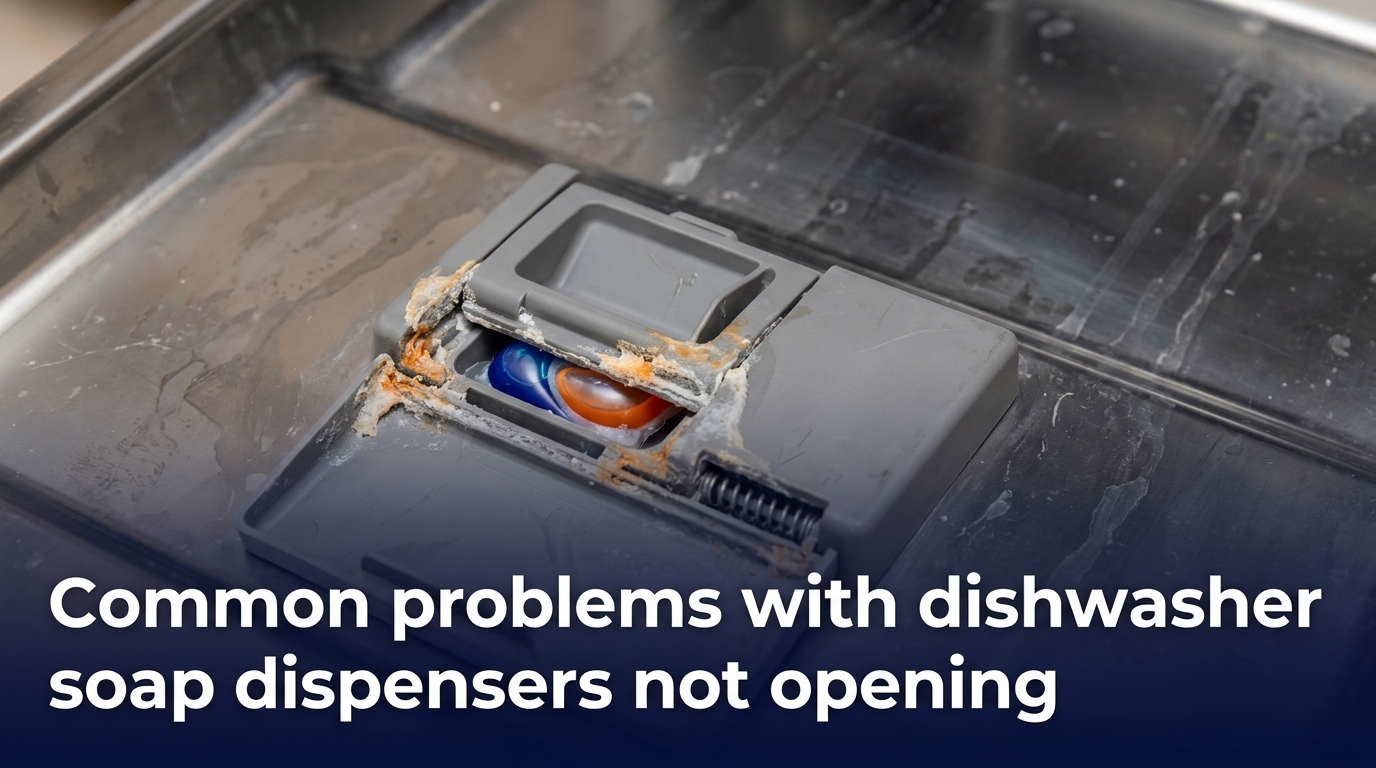
Old or moisture-exposed detergent can harden inside the dispenser and physically glue the door shut. This is especially common with powdered detergent that hasn’t been stored in an airtight container or has been exposed to humidity.
What to do: Use a damp cloth or soft toothbrush to clear out any caked-on detergent residue from the dispenser cup and the door seal. Once clean, test the door by hand – it should open and close freely.
Going forward, use detergent pods or tablets rather than loose powder, and store powder detergent in a sealed, dry container. In humid Central Texas summers, this matters.
3. The Dispenser Spring or Latch Is Broken
The dispenser door is held closed by a spring-loaded latch. When a signal is sent during the wash cycle, the latch releases and the spring pops the door open. If that spring is broken or the latch mechanism is worn or cracked, the door won’t open on cue.
What to do: Check the dispenser door with the dishwasher off. Try opening and closing it by hand – you should feel a definite snap as it latches. If it feels loose, doesn’t latch, or won’t pop open when released, the spring or latch is likely the problem.
A broken latch is a mechanical repair – the dispenser assembly or the latch mechanism needs to be replaced. Most of the time, the entire dispenser unit is replaced as one piece.
4. Faulty Wax Motor or Bi-Metal Actuator
The dispenser is triggered by either a small wax motor or a bi-metal actuator – components that receive an electrical signal and physically pop the dispenser door open at the right moment in the cycle.
When these components fail, the latch never releases. The dispenser stays closed even though nothing is physically blocking it and the mechanism isn’t broken.
This kind of failure requires component-level diagnosis. A technician will test the actuator for proper function and continuity, and replace it if it’s not responding correctly.
5. Control Board Failure
In rare cases, the timing signal for the dispenser comes from the control board, and if that signal isn’t being sent, the dispenser won’t know to open. Control board issues typically show up alongside other symptoms – error codes, cycles not completing, buttons not responding – so a dispenser-only failure is unlikely to be a control board issue unless other things are also going wrong.
6. Rinse Aid Cap Left on the Wrong Compartment
This one catches some homeowners off guard. If rinse aid was accidentally added to the detergent compartment, or the caps were mixed up, the dispenser door may be clogged or sealed shut by rinse aid residue.
What to do: Check both compartments. Clean out any residue with warm water and a soft brush. Make sure you’re putting the right product in the right dispenser going forward. Detergent goes in the dispenser cup. Rinse aid goes in the separate rinse aid reservoir.
How to Test If the Dispenser Is the Real Problem
After a cycle, check whether the dispenser door is open or closed. If it’s still closed and the detergent is still inside, the dispenser failed. If the door is open but the cup still has detergent in it, the detergent may have hardened or the water pressure during the cycle wasn’t adequate to fully rinse it out.
If the dispenser door is open and the cup is empty, the dispenser worked – and your dish-cleanliness problem lies elsewhere.
America’s Appliance Repair Diagnoses Dispenser Issues Correctly
Our highly skilled technicians at America’s Appliance Repair serve homeowners across Austin, Round Rock, Cedar Park, Georgetown, Leander, and Pflugerville. We set the standard for accurate, efficient dishwasher repair in Central Texas.
If your soap dispenser isn’t opening and you’ve already checked for blockages and detergent buildup, it’s time to have the mechanism tested properly.
Call America’s Appliance Repair at 512-337-3246 to schedule your diagnostic appointment.
We’ll find the problem and fix it right – backed by our one-year repair warranty.