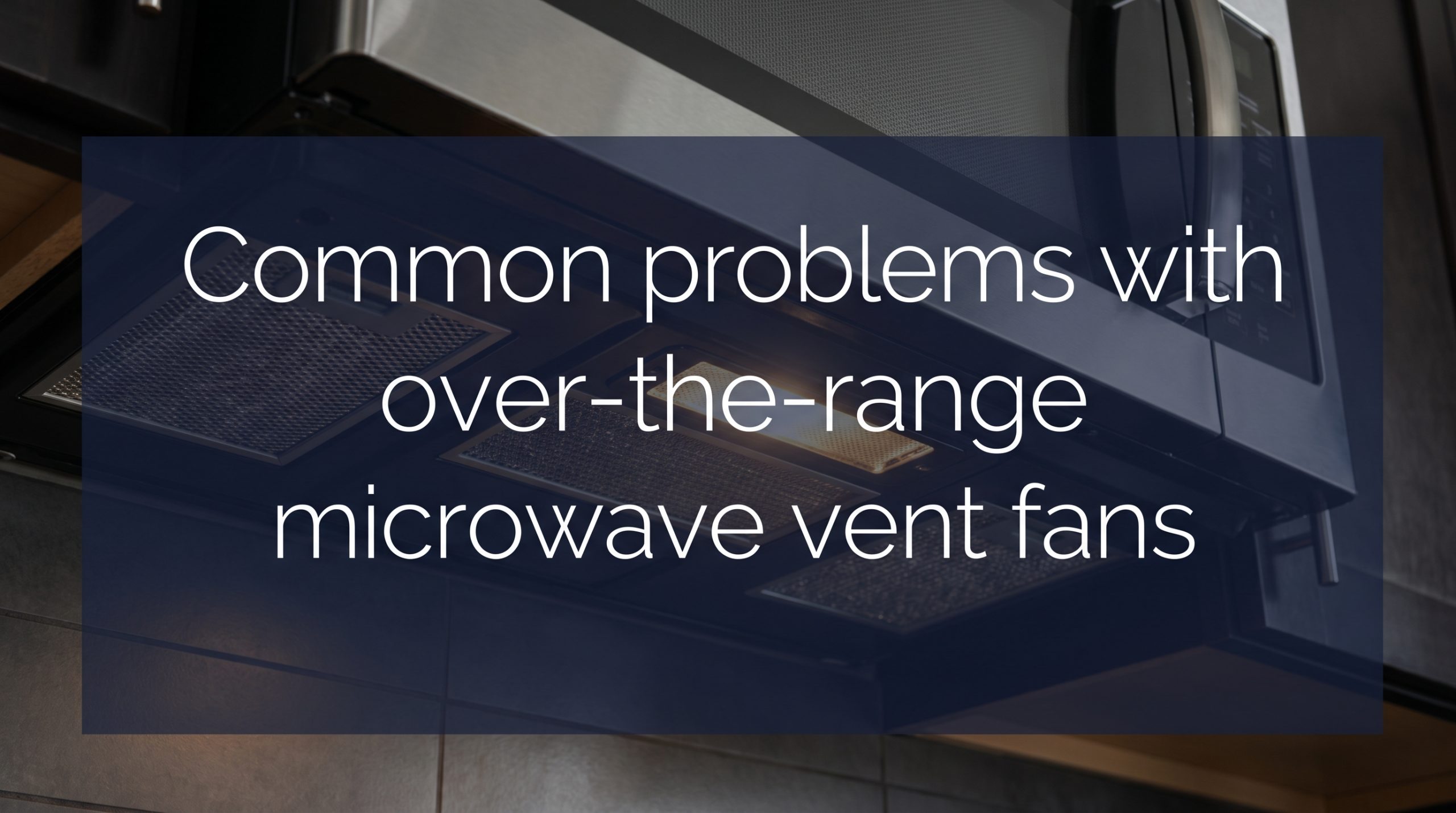
The vent fan on an over-the-range microwave does double duty. It removes smoke, steam, and cooking odors from the range below, and on recirculating models, it also filters and returns that air back into the kitchen. When the fan stops working properly, you notice it fast, especially if you do a lot of stovetop cooking.
Here are the most common vent fan problems and what typically causes them.
Problem 1: The Fan Won’t Turn On
If the vent fan doesn’t respond when you press the button, the first thing to check is whether other functions are working. Does the microwave heat food? Does the light come on? If the microwave works otherwise, the issue is likely isolated to the fan circuit.
Possible Causes
Failed fan motor. Fan motors wear out over time. If the motor has burned out, the fan won’t run regardless of what you press on the control panel.
Faulty control board relay. The control board tells the fan when to run. If the relay that sends that signal has failed, the motor never receives power, even if the motor itself is fine.
Damaged wiring or loose connections. A wire that has come loose from the fan motor connector will cut power to the fan. This is more common in units that have experienced vibration stress over several years.
Failed fan switch or touchpad. If the button that activates the fan is worn or unresponsive, the fan won’t engage even if everything else is working.
Problem 2: The Fan Is Loud or Making Unusual Noise
A certain amount of fan noise is normal. Over-the-range microwave fans move a significant volume of air, and at high speed settings, they’re never perfectly quiet. But if you’ve noticed a new noise that wasn’t there before, something has changed.
Types of Noise and What They Mean
Rattling. Something is loose. This could be the fan blade hitting the housing, a loose mounting screw, the grease filter vibrating, or even a small piece of debris that made it past the filter and is now bouncing around near the fan. Check and tighten the grease filter first, as a loose filter is the most common cause of rattling on these units.
Grinding. A grinding noise from the fan suggests the motor bearings are wearing out. Bearings are not typically serviceable. A grinding motor will eventually fail completely, so this is a sound that warrants attention sooner rather than later.
High-pitched squealing. Also a bearing issue in most cases. A fan motor that squeals during operation is failing and should be replaced before it quits entirely and leaves you without ventilation.
Rumbling at high speed only. An out-of-balance fan blade can cause a low rumble at high speeds. This can result from a blade that has warped, been bent, or accumulated uneven grease buildup. Cleaning the blade thoroughly sometimes resolves it.
Problem 3: The Fan Runs But Doesn’t Ventilate Well
If the fan runs but you’re not getting much airflow, there are a few likely causes.
Grease filters are clogged. This is the most common reason for reduced airflow. The aluminum mesh grease filters that cover the underside of the microwave capture grease from stovetop cooking. When they’re clogged, airflow through the fan drops significantly.
Grease filters should be cleaned every 1 to 3 months depending on how much stovetop cooking you do. Most are dishwasher safe. If they’re heavily soiled and warped, replacement is better than cleaning.
Charcoal filter is saturated. For recirculating (non-vented) installations, a saturated charcoal filter restricts airflow and allows odors through. Charcoal filters should be replaced every 6 to 12 months. Unlike grease filters, they cannot be cleaned.
Damper is stuck closed. Over-the-range microwaves that vent to the outside have a damper that opens when the fan runs and closes when it’s off, preventing outside air from coming in when the microwave isn’t in use. If this damper is stuck in the closed position, it restricts airflow even when the fan is running at full speed. Grease accumulation and debris are common causes of a stuck damper.
Fan motor is weakening. A motor that’s beginning to fail may still run but at reduced speed, which means less air movement. If the fan is running slower than it used to and filter cleaning didn’t help, the motor is the next thing to evaluate.
Problem 4: Fan Turns On By Itself
Some over-the-range microwaves have an auto-vent feature that activates the fan automatically when a temperature sensor detects excess heat from the cooktop below. If your fan seems to turn on by itself, this feature may be the explanation, not a malfunction.
However, if the fan runs continuously without stopping, even when the cooktop is off and cool, the auto-vent sensor or the control board may have failed in the “on” position. This is a legitimate repair issue.
When to Call a Professional
Call a technician when:
- The fan won’t turn on and cleaning or filter replacement didn’t help
- The motor is making grinding or squealing sounds
- The fan runs but produces noticeably less airflow than it used to, and the filters are clean
- The fan runs continuously without stopping
- You suspect a control board or wiring issue
A highly skilled technician can test the fan motor, assess the control board, and inspect the damper and wiring to pinpoint exactly what’s failing. Over-the-range microwaves involve electrical components and mounting under overhead cabinetry, making professional diagnosis both safer and more efficient than guessing.
America’s Appliance Repair Keeps Central Texas Kitchens Running
America’s Appliance Repair has been serving homeowners in Austin, Cedar Park, Leander, Georgetown, Round Rock, Pflugerville, and throughout Central Texas since 2016. Our Old School Professionals diagnose problems correctly and set the standard for quality appliance repair in this region.
Related service: dishwasher repair
If your over-the-range microwave vent fan isn’t performing the way it should, call us at 512-337-3246 to schedule a diagnostic visit. We’ll find the issue and fix it right.